1994 Guido Gouweloos and Marcel Boeren
Platform: Commodore Amiga
Piracy Deluxe began life as an Amiga conversion of the Commodore 64 classic game Piracy by ACE Games, originally released around 1986. Development started in 1992 and continued intermittently until 1994, with the project expanding significantly over time before ultimately falling victim to the collapsing Amiga market.
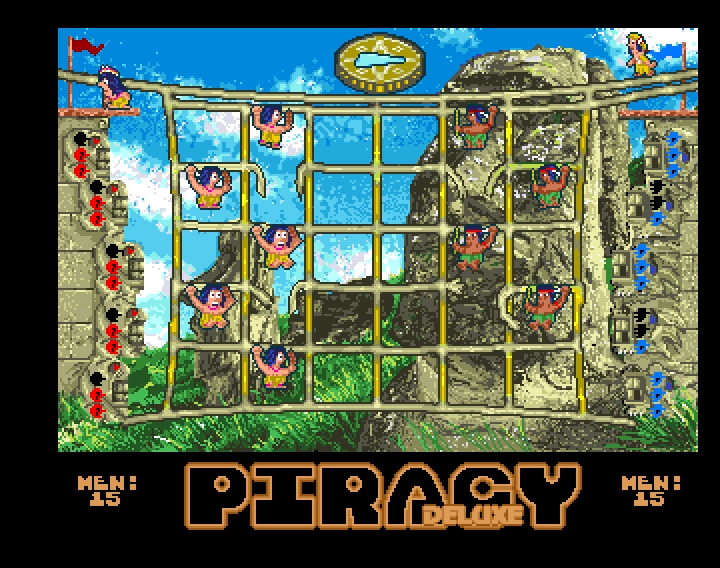
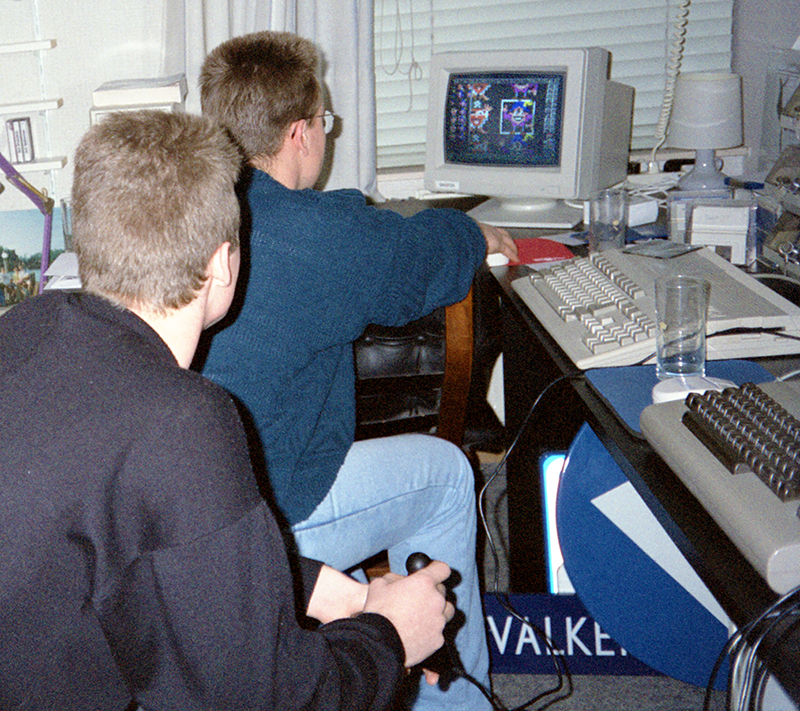
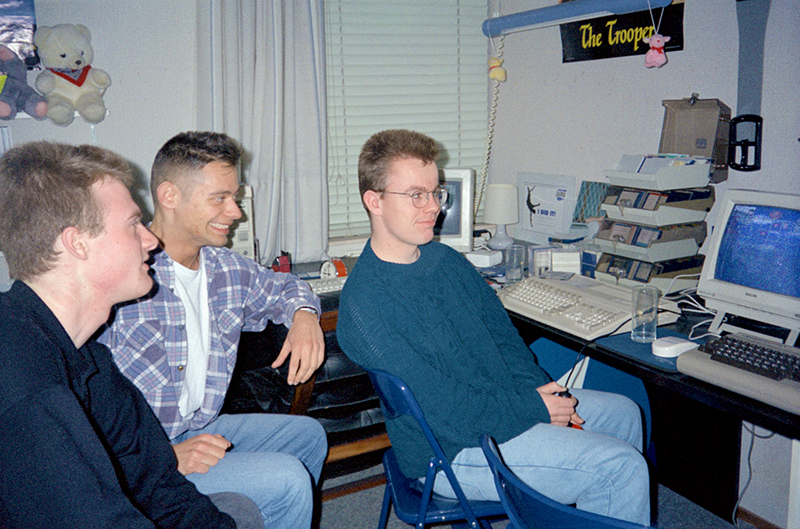
The project was undertaken by Guido Gouweloos and Marcel Boeren, who met while studying computer science. Marcel was keen to learn Amiga programming and the pair decided to start something new. Guido recalls showing Marcel the original Piracy on the C64, which he enjoyed – and the idea of an Amiga version was born, though the exact reasoning behind the choice has long since been forgotten.
One of the earliest and most critical challenges was creating a capable computer opponent. To solve this, Guido and Marcel consulted their maths and algorithmics teacher, Mr Huysmans, who suggested implementing a min/max algorithm. This AI system was developed first, as its feasibility would determine whether the entire project could proceed. Written entirely in 68000 assembly, the algorithm used bit-structures to represent the playfield and recursively evaluated possible moves to a set depth. It proved successful and was refined further as development progressed.
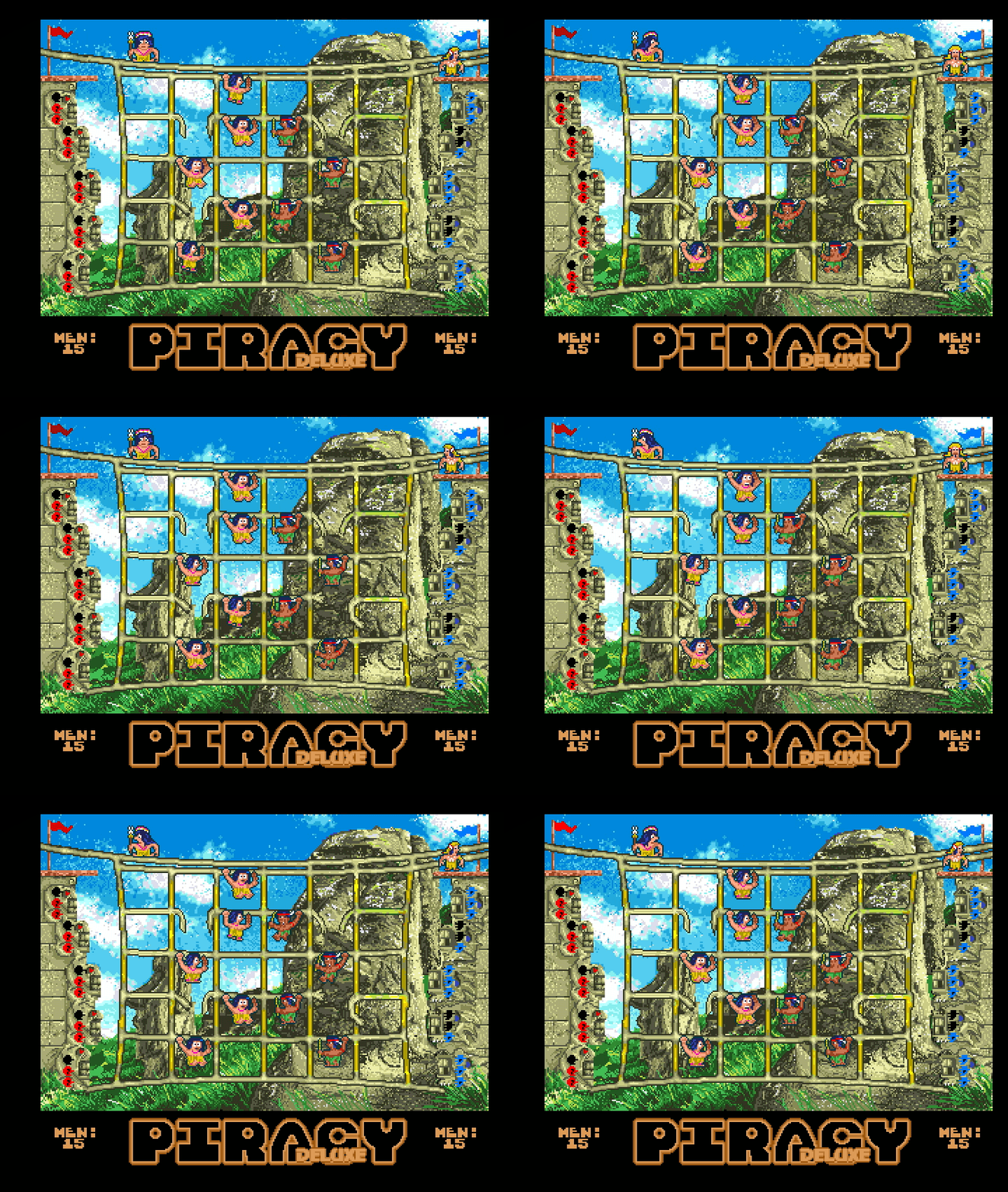
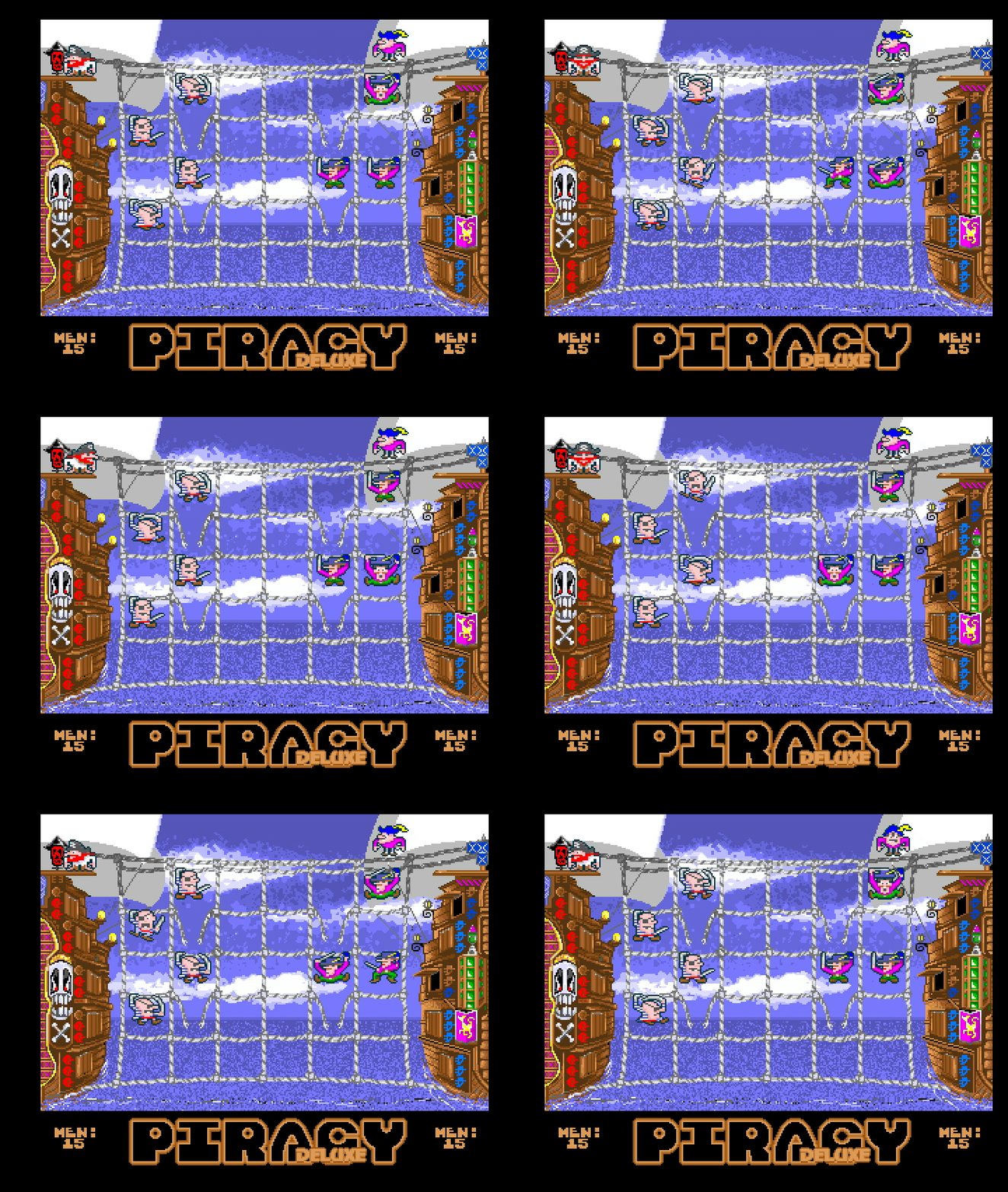
Performance quickly became a major concern. On later levels, the AI could take a significant amount of time to calculate its next move. On a 68020-based Amiga, level 7 requires roughly 45 seconds of thinking time, with this nearly doubling on a 68000 system. To prevent animation from further impacting CPU time, the team devised a clever workaround: the playfield was drawn into six separate buffers, matching the six character animations. This allowed the game to simply switch buffers during AI calculations rather than redraw the scene repeatedly.
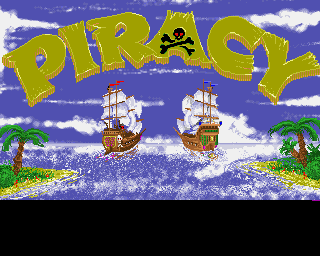
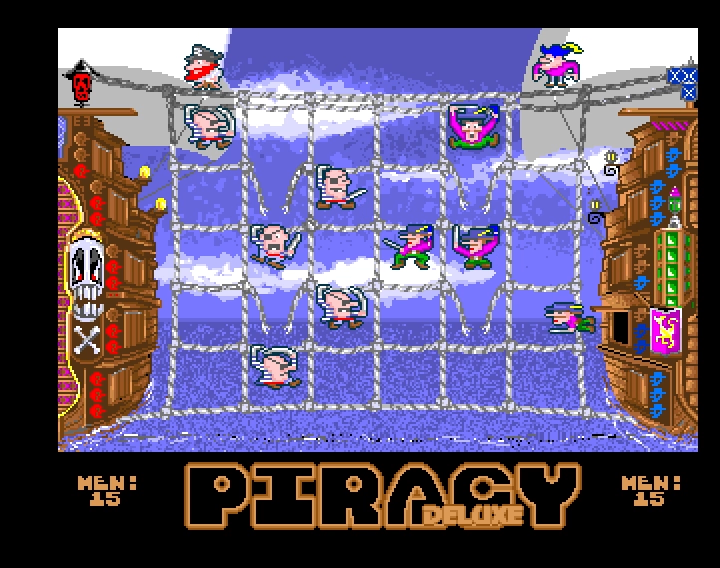
Once the core algorithm was in place, Guido converted the original C64 graphics into Amiga formats using Deluxe Paint, providing a foundation for artist William van de Coolwijk to create new animations, backgrounds, and title screens. At this stage, the game still closely resembled the original, featuring the familiar pirate ships background and retaining the Piracy name.
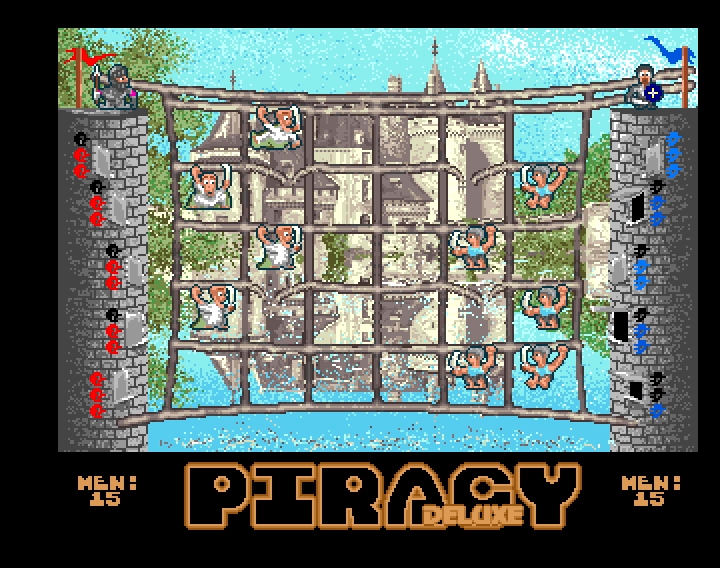
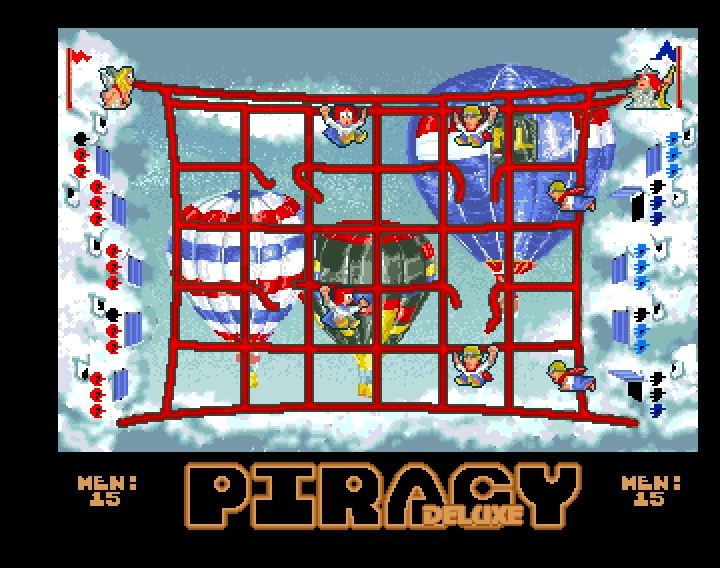
If you’re not familiar with the original Piracy, then the game is a turn-based strategy game played on a vertical “net” battlefield, loosely comparable to chess or draughts. Two players, either human vs. human or human vs. computer, start on opposite sides – each commanding a crew positioned behind a series of hatches. On a turn, players can either load crew members onto the net by opening selected hatches, or make all active crew jump in a chosen direction using a compass-based control.
The objective is to eliminate all of the opponent’s crew, either by simply jumping on them when bungling in the net, forcing them into damaged sections of the net where they fall to their deaths, or by jumping into enemy hatches to permanently disable them. A key mechanic is the net’s vertical “wrap-around”, where diagonal jumps off the top or bottom reappear on the opposite edge. Higher levels increase the computer opponent’s strength, at the cost of longer thinking time.
By autumn 1992, the game was largely complete. The team began searching for a publisher, focusing on the UK market and attempting to showcase the game at the European Computer Trade Show (ECTS) in London. They held at least one tentative meeting at the March 1993 show, possibly with Oxford Software, but progress stalled. At one point, the interested publisher didn’t even have an Amiga at their stand. Copyright concerns also loomed, as the developers did not know who owned the original Piracy IP.
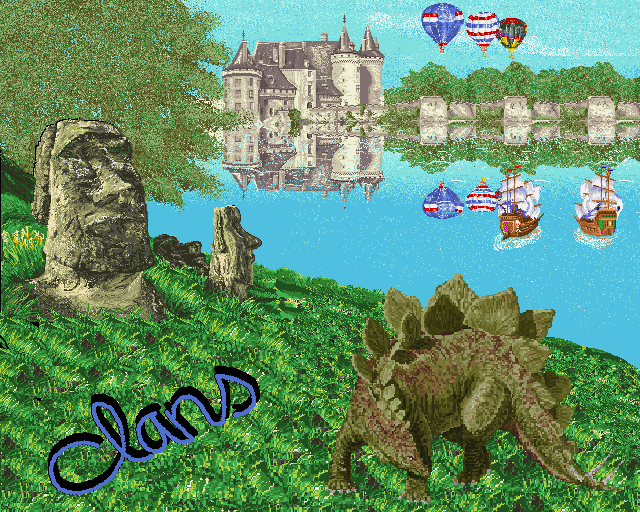
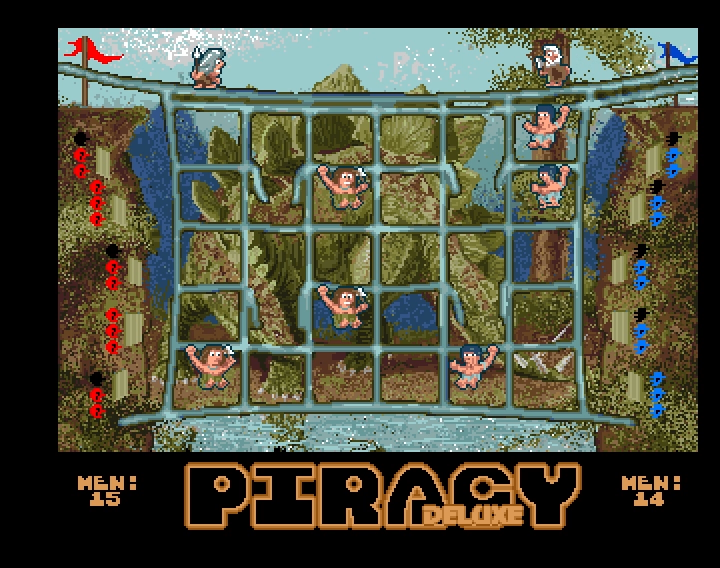
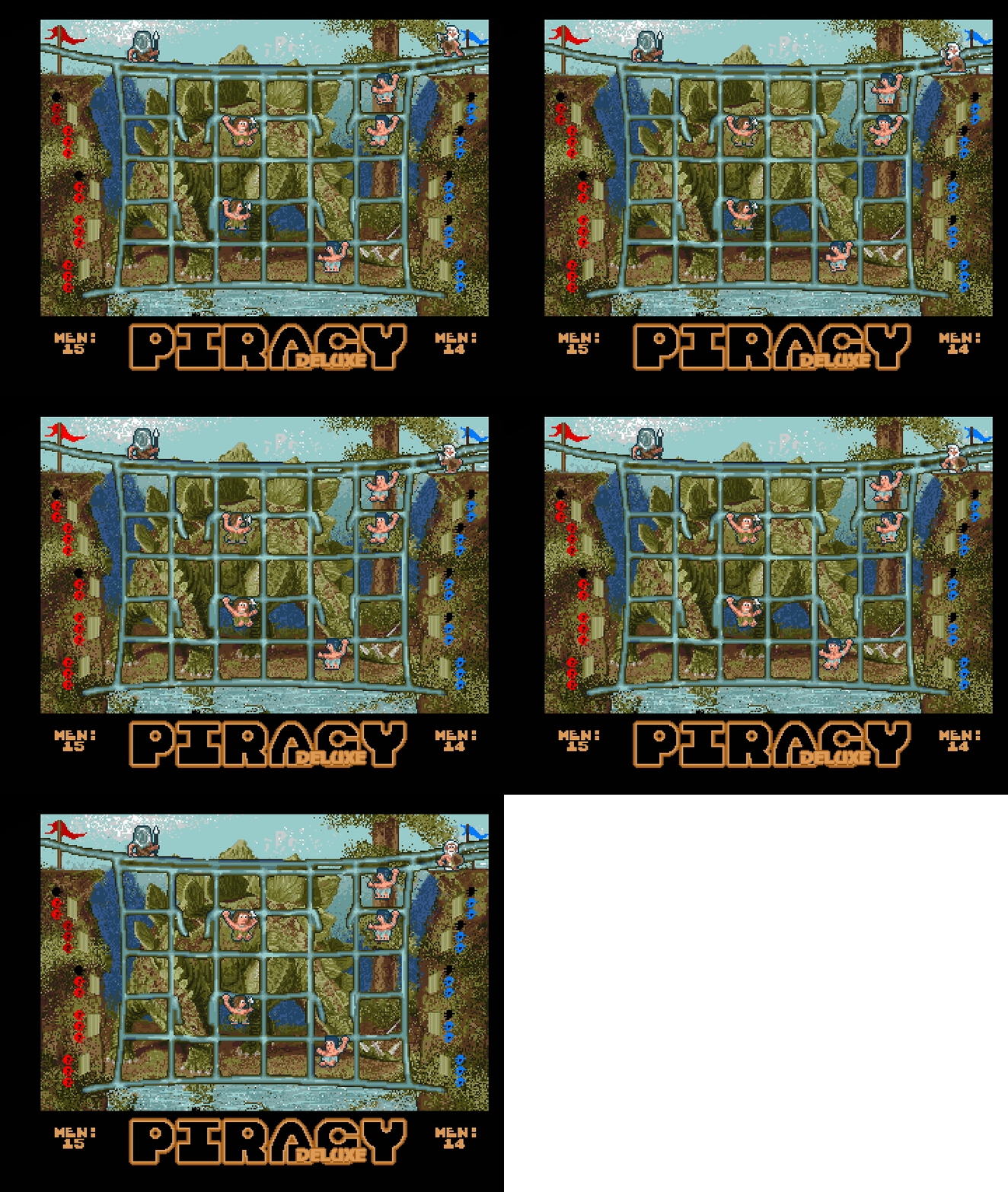
Eventually, a potential publishing deal emerged closer to home. Guido was working in a computer store selling Amigas and consoles, owned by a UK-based businessman who attended ECTS regularly. He offered to publish the game under his own “US Dreams” label, but with major conditions: the game needed seven new backgrounds, unique music for each, and a complete rebrand. The name Piracy was dropped in favour of “Clans”, and new level themes were requested — including a prehistoric, dinosaur-inspired level influenced by the then-popular Jurassic Park.
Although William was not enthusiastic about the additional workload, the promise of a publisher convinced him to proceed. He created seven new backgrounds, which Guido converted into raw graphics and masks for use in the game. A new “Clans” title screen was also assembled from this artwork. Music was provided by Frans Coolen, a keyboard player in a band Guido knew from the computer store, who composed the title tune and level ditties.
However, the deal was never formalised. Before any contract was signed, Commodore declared bankruptcy, and the publisher withdrew, citing the death of the Amiga market. With that, the project was canned.
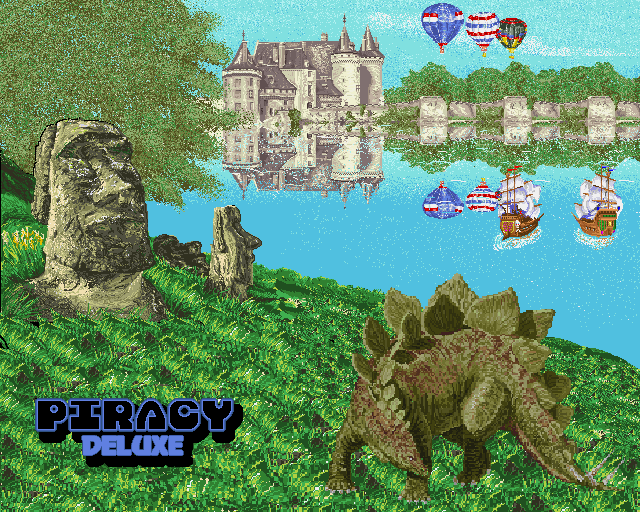
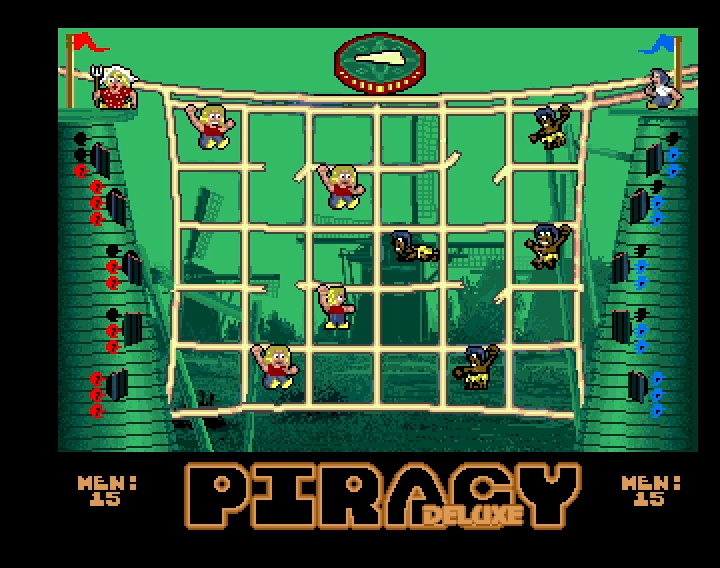
In the aftermath, Guido reverted the game’s identity back toward its roots, renaming it Piracy Deluxe and undoing some of the “Clans” changes. One of the new levels — a windmills or “Holland” themed stage was quietly dropped. Guido notes that the round hatches didn’t visually fit the design, as the background had originally been created for another project. Although the animations were charming, the level was ultimately cancelled and the classic pirate ships stage was reinstated.
What survived on Guido’s Amiga 1200 hard drive years later has been remarkably complete:
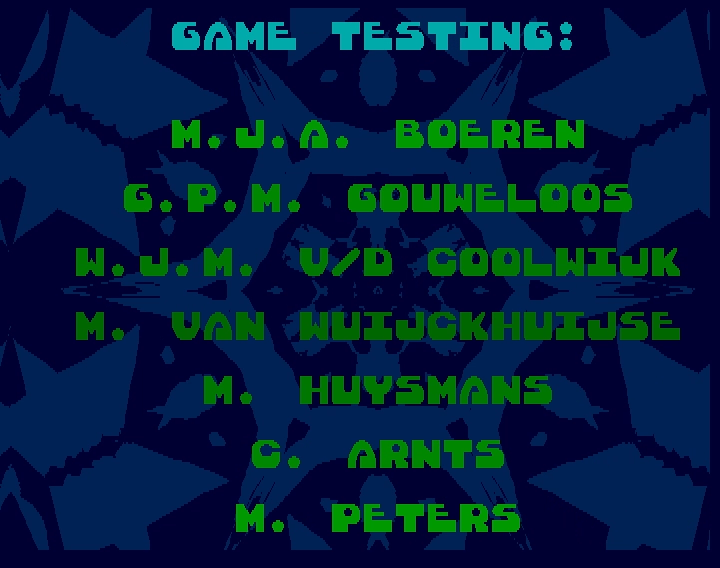
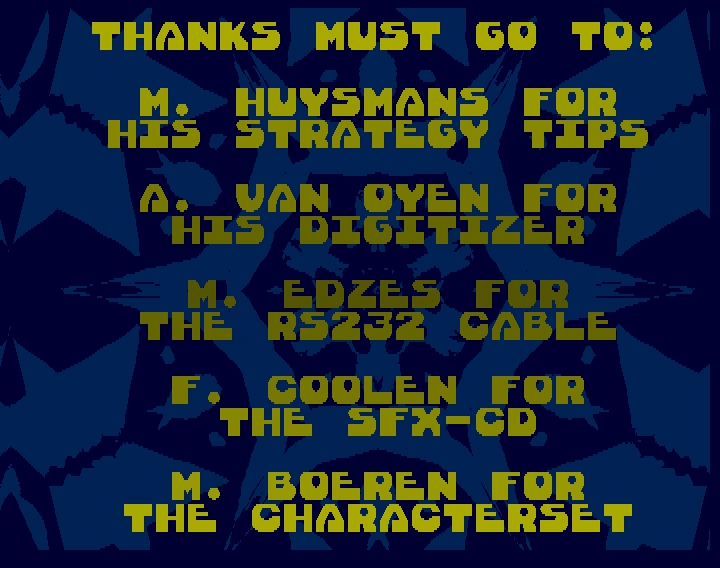
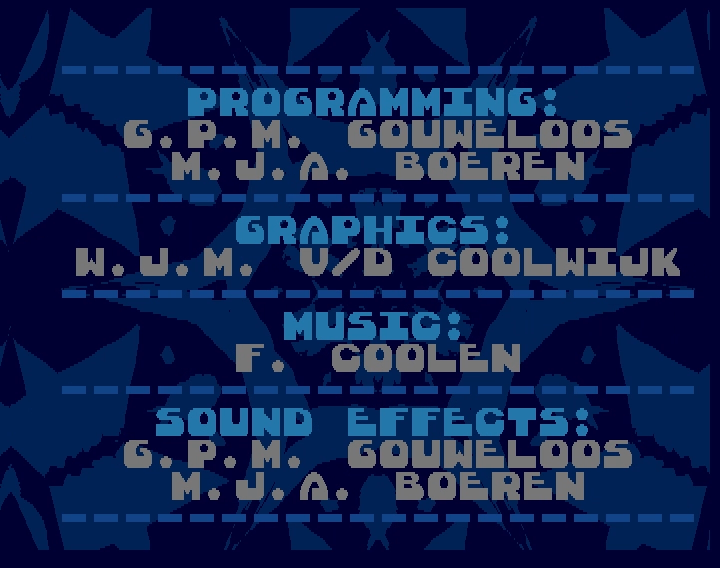
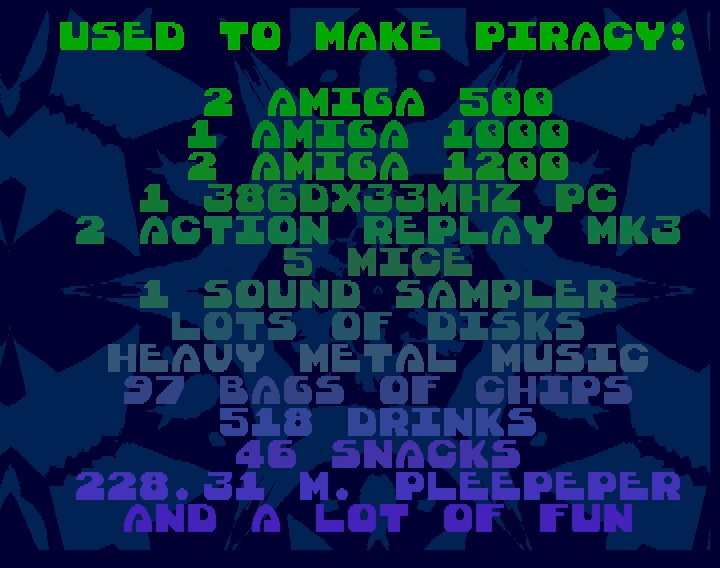
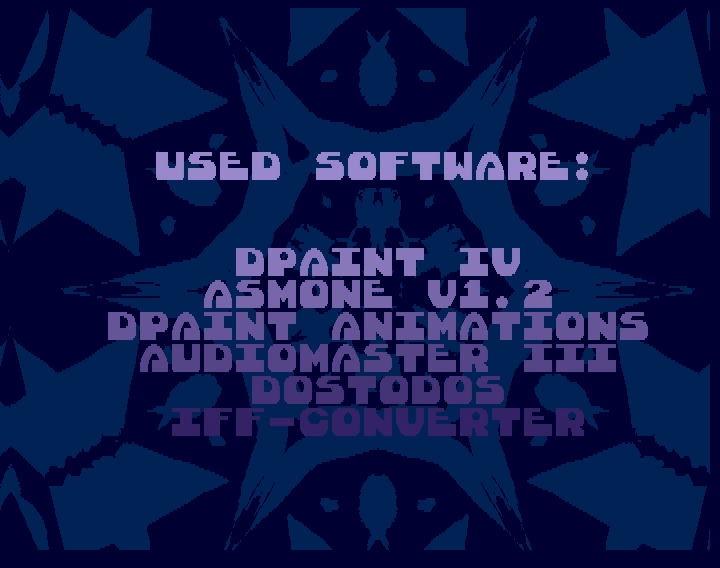
- Intro and credits
- Options menu
- Eight level themes (one cancelled)
- Music modules (some unused or unfinished)
- Graphics, including unused and renamed title screens
- Partially implemented sound effects
The game was around 99.5% complete, lacking only some final polish, missing samples, and proper disk integration.
In 2025, Guido undertook the final push to make the game playable as a complete release. This involved writing the missing “glue” code that had never existed in the 1990s, creating a custom trackloader, debugging the intro and credits to work on a standard 68000 CPU, packing and reorganising data to fit across multiple disks, and implementing disk-change checks. The result was a fully playable version running on an Amiga 500 with 1MB of RAM, with enhanced performance on 68020+ systems.
The recovered release we have for you today thanks to Guido consists of three ADFs:
- Disk 1: Intro, credits, and options (cached in memory)
- Disk 2: Main game and levels
- Extra disk: The cancelled windmills/Holland level
Despite minor remaining issues with sound effects and limited real-hardware testing, Piracy Deluxe stands as a near-finished Amiga title — one that narrowly missed release due to market collapse rather than technical failure.
Decades on, the project has now finally found a home on Games That Weren’t, preserving not just the game itself, but the story of a passionate student-era development effort. We hope you enjoy it!
Credits
- Programming: Guido Gouweloos, Marcel Boeren
- Graphics: William van de Coolwijk
- Music: Frans Coolen
Additional thanks / acknowledgements
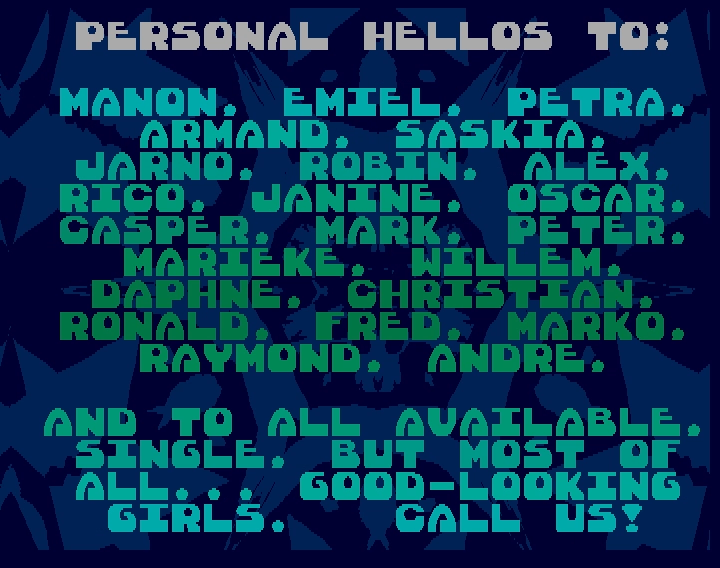
- Manon Gouweloos – for personal support throughout his projects
- Anthony Donker – for the ICE-Packer and example trackloader
- Antony Mo – for copying Guido’s old A1200 hard drive to Compact Flash for WinUAE use
- Twan van Dongen – for attempting real-hardware testing
With a huge thank you to Guido Gouweloos for all his work piecing the game back together and sharing his game and story.
Download
Video
Gallery